Mandatory E-Invoicing in Greece: What Every Small Business Must Do Now
E-invoicing is progressively becoming mandatory for all businesses in Greece — even the smallest. What exactly changes, what your options are, and the technical groundwork you need to prepare before the deadline catches up with you.
Published
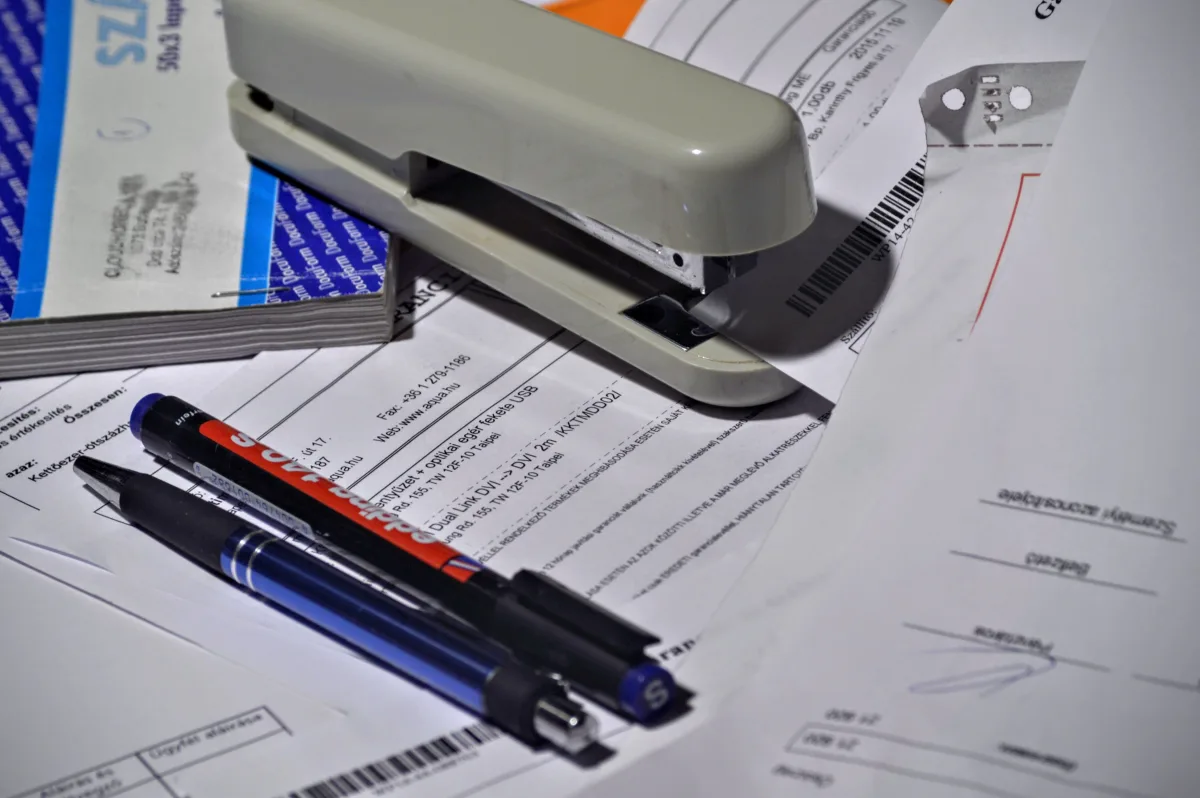
If your business issues invoices — and which one doesn't — this concerns you personally. E-invoicing for business-to-business transactions in Greece is progressively becoming mandatory for everyone: not just the "big players," but also the sole proprietorship, the small shop, the workshop, the technical office. And as with every such change, those who leave it for the last minute will be scrambling — during a period when every provider and every accounting office will already be overloaded.
What exactly changes — in plain terms
Until now, businesses were required to transmit their document data to AADE's myDATA platform. The new framework goes a step further: the invoice itself must now be issued and delivered electronically, in a structured digital format — not as a simple PDF sent by email, but through a certified channel. An important detail that confuses many: e-invoicing does not replace myDATA — the two obligations coexist, the difference being that in the new system, transmission happens automatically at the moment of issuance.
Where things stand now
Implementation is phased: for the larger businesses (by turnover) e-invoicing is already mandatory, while for all the rest — that is, the vast majority of SMEs — the obligation takes effect in the immediately following period, with a transitional adjustment window during which parallel use of the older issuance methods is temporarily allowed. In addition, for domestic business-to-business transactions, acceptance of the electronic invoice by the recipient is mandatory — meaning that even if you don't issue many invoices yourself, you will be receiving electronic ones from your suppliers.
Note: the exact dates and any extensions are set by AADE and may change. For what applies to your specific case at the time of reading, confirm with your accountant or on AADE's official website.
Your options for issuing
- A certified e-invoicing provider: commercial services that handle issuance, delivery, and automatic transmission to myDATA. The most complete solution for businesses with document volume or commercial software.
- AADE's free applications: timologio and the myDATAapp mobile app offer an equivalent, no-cost solution — a realistic option for very small businesses with few documents.
- Your existing commercial/accounting software connected to a provider: most modern ERP and commercial management programs integrate with certified providers, so you keep working in the environment you know.
Which option suits you depends on document volume, the software you already use, and how you operate — and this is exactly where the decision should be made together with two people: your accountant and your technical partner.
The part nobody tells you about: technical preparation
Choosing a solution is half the job. The other half — the one usually discovered at the last minute — is technical:
- Software compatibility: does your commercial program support provider integration? Does it need a version upgrade? Is it running on an operating system that's still supported?
- Reliable connectivity and infrastructure: when invoice issuance must pass through an online channel, an unreliable connection or an aging computer stops being a "minor annoyance" — it becomes an obstacle to issuing an invoice at all.
- Digital archiving & backup: electronic documents must be stored securely for as many years as required. That means organized storage and backups that actually work — not a folder on one computer we "hope won't fail."
- Security: invoices contain customer details and financial data. The move to a fully digital flow is the right moment to bring access, passwords, and phishing protection into order — because scammers love transition periods, and "fake invoices" are among the most common lures.
Why you shouldn't wait until the last minute
The transitional period offers breathing room — but experience from every similar change shows the same pattern: as the final deadline approaches, accountants, providers, and technicians can't keep up, and those who moved last paid for the rush with errors and operational disruptions. Moreover, the framework has provided tax incentives for early adaptation — one more reason to discuss it with your accountant now, rather than when it's merely an obligation.
Clear roles: accountant and technical partner
To keep things straight: your accountant is responsible for the tax side — what applies to your specific business form, declarations, deadlines, incentives. Your technical partner handles implementation: software installation and integration, infrastructure, network, archiving, backup, and security. That's exactly how MyeliTech works — in cooperation with your accounting office, not in its place — so the transition happens once and correctly, through our Business IT Management service, based in Drama and covering Serres, Kavala, and all of Greece.
Want to know whether your current system is ready — and what exactly is missing if it isn't? Contact us via myelitech.gr for a quick technical readiness check, before the last-minute rush begins.
Frequently asked questions
Yes — the obligation is progressively extending to all businesses regardless of turnover, with a transitional adjustment period. For the exact dates applying to your case, confirm with your accountant or AADE.
No — issuance must be in a structured digital format through a certified channel (a provider or AADE's free applications).
Not fully — myDATA transmission and e-invoicing are two coexisting obligations. Under the new framework, the solution you choose handles both simultaneously.
Your accountant for the tax side (what applies to you, deadlines, incentives) and your technical partner for implementation — software, integration, infrastructure, archiving, and security. MyeliTech works alongside your accounting office on the latter.
It depends on your software and infrastructure — from a few days to a few weeks if upgrades are needed. That's why a readiness check is worth doing early, not under pressure.
Related articles
The Question I Get Asked Most Often
"Is it worth fixing, or should I replace it?" I hear it almost every week, for 25 years now — about computers, servers, networks, even entire infrastructures. And every time, I resist the temptation to give the short answer the person in front of me wants to hear. Here's why.
Read more
Reach No Longer Has a Postal Code: The Digital Era of Regional Greece
For decades, all over the world, serious technology work was considered the business of major hubs. That era has ended — quietly. A view from Drama, Greece, on what the digital age means for regional areas, which of their advantages nobody talks about, and what every local business stands to gain.
Read more
Windows 10 End of Support: The Complete 2026 Decision Guide
Windows 10 support ended in October 2025 — yet millions of computers, quite possibly yours, still run it. What the security extensions actually cover today, who is genuinely at risk, and which of the 4 paths fits your situation.
Read moreNeed help with this?
See how we can help with: Business IT Management
Ready to upgrade your infrastructure?
Let's talk about your business needs — no commitment.